The Ultimate Guide to Effective Note-Taking Techniques
The Ultimate Guide to Effective Note-Taking Techniques begins with understanding the fundamental principles that can transform how you capture and organize information. Effective note-taking is not merely about writing down what you hear; it involves actively engaging with the material. One proven method is the Cornell Method, which divides your page into distinct sections for cues, notes, and summaries. This structure encourages you to summarize your thoughts and highlights key ideas, ensuring that your notes are both thorough and concise.
Another powerful technique is the Mind Mapping approach, which allows you to visually organize information. By starting with a central idea and branching outwards with related concepts, you create a clear visual representation of the material, making it easier to recall later. Additionally, consider including symbols and abbreviations in your notes to speed up the writing process and improve organization. By implementing these techniques, you'll enhance your ability to retain and understand complex information, making your note-taking more effective than ever.
How to Organize Your Notes for Maximum Retention
Organizing your notes is crucial for enhancing your retention capabilities and overall learning efficiency. Start by categorizing your notes based on subjects or topics. This can be done using different folders—physical or digital. Employing a color-coding system can also prove beneficial, as it allows you to quickly identify related materials. For example:
- Blue: Mathematics
- Green: Science
- Yellow: Literature
Additionally, consider creating a summary page for each subject that highlights key concepts and theories, which will serve as a quick reference guide.
Another effective strategy is to implement the Cornell note-taking system, which encourages the division of your notes into three sections: cues, notes, and summary. In this format, use the left column for questions or key terms, the right column for detailed notes, and the bottom space for summarizing the information after your lecture or study session. This structure not only facilitates review but also promotes self-testing, which is vital for memory retention. Remember, the key to maximum retention lies in not just organizing your notes but also engaging with them actively.
Top 10 Tools and Apps for Achieving Note-Taking Nirvana
In today's fast-paced world, effective note-taking is essential for capturing ideas, organizing information, and enhancing productivity. The right tools can elevate your note-taking experience to achieve note-taking nirvana. From digital applications to traditional methods, there are countless options available. Here are our top 10 recommended tools and apps that can transform the way you take notes:
- Evernote - A versatile app that allows you to create notes, lists, and reminders while seamlessly syncing across all devices.
- Microsoft OneNote - Perfect for users who appreciate a digital notebook-like experience, complete with tagging and organization features.
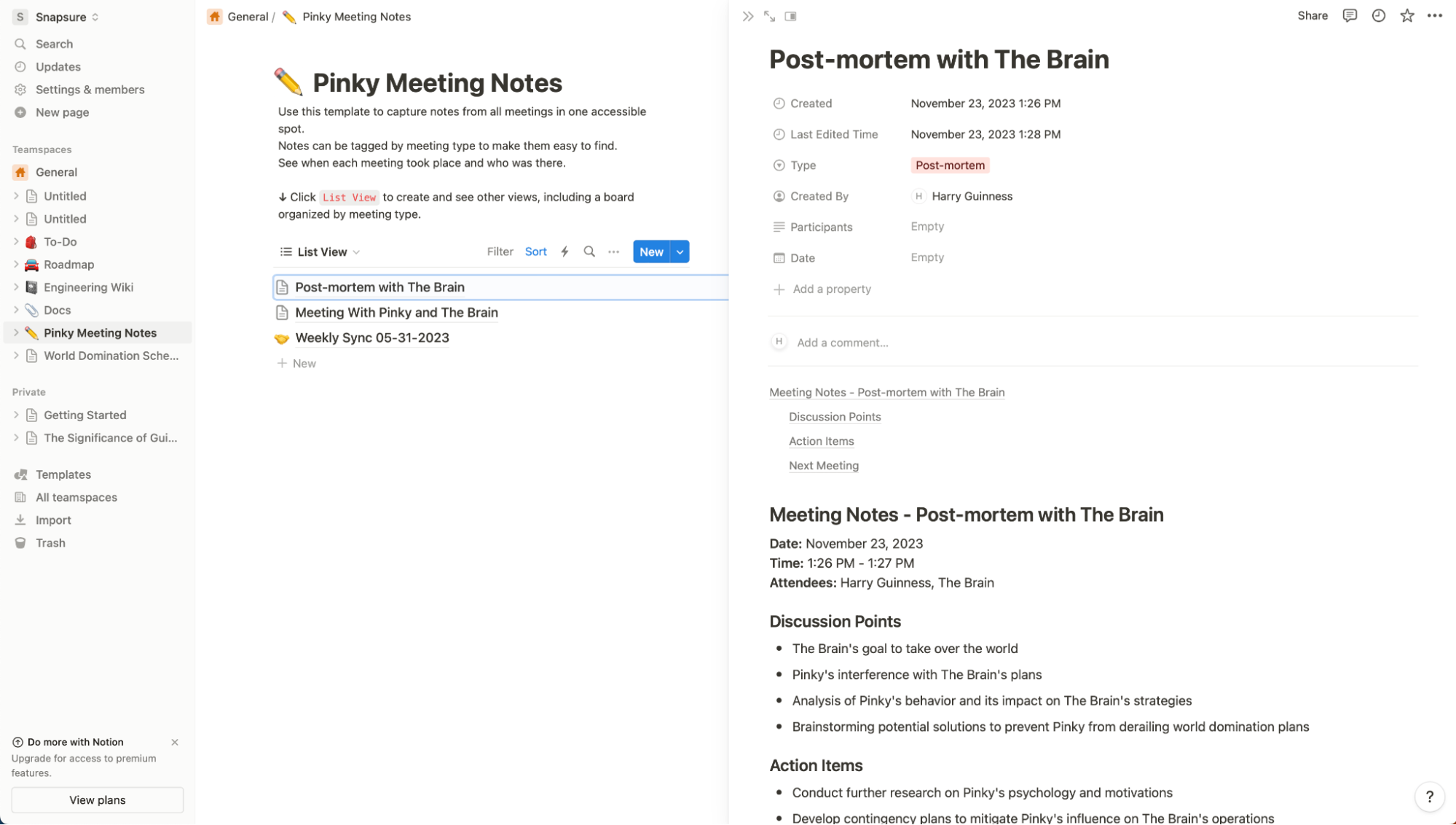
- Notion - A comprehensive tool that combines note-taking with project management, allowing for customizable templates and efficient workflows.
- Google Keep - Ideal for quick notes and reminders, this app's simple interface makes capturing ideas easy and accessible.
- Bear - A beautiful app designed for Mac and iOS users, offering a clean writing environment and rich formatting options.
- Apple Notes - Built into Apple devices, this app offers simplicity and integrates smoothly with other iOS and macOS applications.
- Trello - While primarily a project management tool, Trello can be used creatively for structured note-taking and collaboration.
- SimpleMind - This mind mapping tool helps you visually organize your thoughts, making it perfect for brainstorming sessions.
- Roam Research - A unique note-taking app designed for networked thought, facilitating connections between ideas.
- Obsidian - A powerful knowledge base that works on a local folder, allowing for markdown notes and linking between concepts.